


The first thing to know about Wikimania this year is that it convened in the middle of the worst standoff between the Wikimedia Foundation (WMF) and its own employees in years. In the weeks before, one WMF staffer suggested to The Wikipedian that things could get “spicy.” It was a good prediction.
The second thing to know about Wikimania this year is that it involved more security theater than any previous Wikimania. After a scary incident at last year’s WikiConference North America—where a disturbed man brought a gun to the event and threatened to commit self-harm, only to be disarmed by plucky Wikipedians—tickets were limited and the venue was withheld until the last possible moment.
And if there is yet one more thing to know, it almost goes without saying, of course the inescapable topic was the promise and peril of generative AI, as it has been at every wikiconference The Wikipedian has attended for the past three and a half years. Each year the models get more powerful, each year the threats and opportunities expand, and each year people get more anxious/excited.
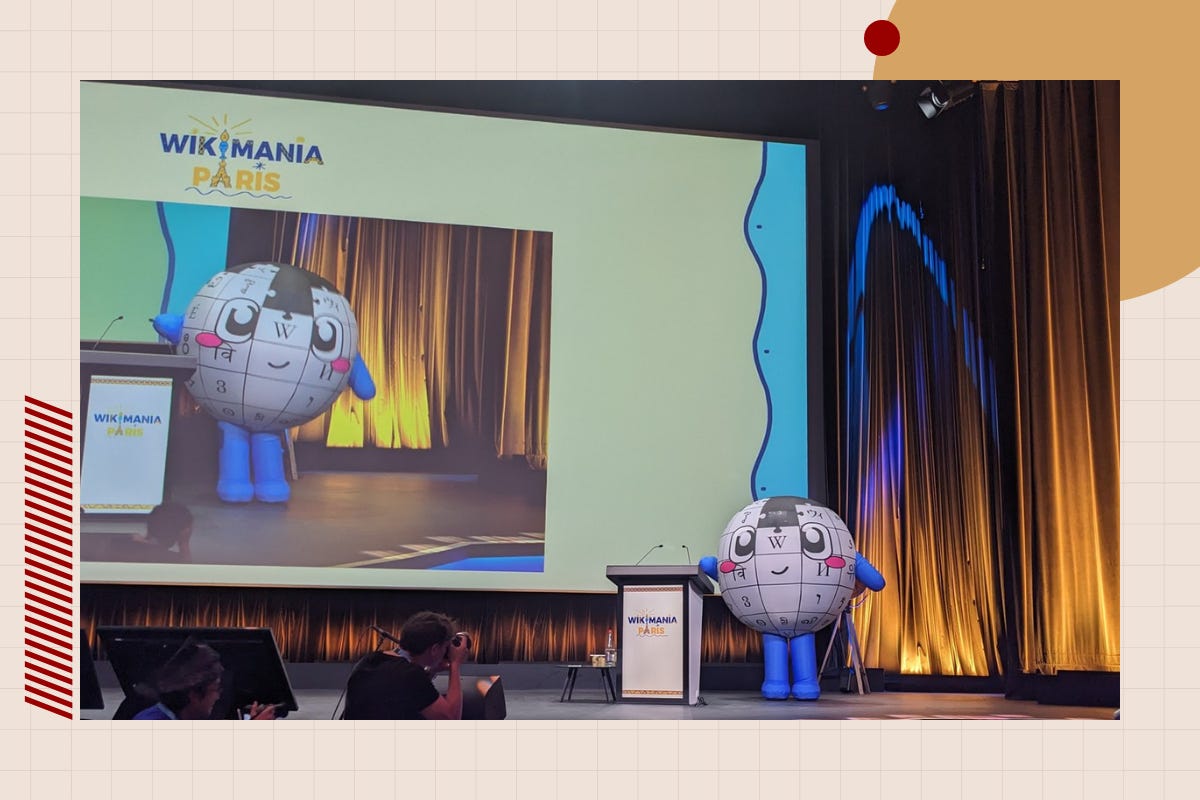

Fringe Benefits
This year, events on the periphery of Wikimania proper included an all-day pre-conference AI workshop and a friendly counter-conference, Wiki Fringe, inspired in part by the famous Edinburgh Fringe vis-à-vis the original, concurrently held in a maker space just across the canal from the science museum.
At the AI pre-conference day, a third to half of the room identified themselves as having “vibe-coded.” Speakers explained agentic harnesses and shared skill repositories; among the more interesting talks was one by a native Telugu speaker on how it costs more tokens to use AI in languages that don’t use Romanized characters. A group discussion inviting views on proper AI usage in the Wikimedia world quickly revealed a broad consensus: use it for the things we trust generative AI to do, and don’t use it for the things we don’t.
Which is not to say everyone was eager to spend more time than necessary on the subject. One developer at the main conference told The Wikipedian he was intentionally avoiding the AI sessions entirely.
But the Fringe was a blast, despite the poor AC, and it doubled as the designated after-hours party spot several nights running. The crowd included former Wikimedia staffers, the WikiPortraits crew, a representative from an open-source, open-weight, open-everything LLM project, and a Brooklyn artist with a receipt printer, printing Wikipedia articles on receipt paper.
People sometimes ask me how Wikipedia editors view generative AI, and the truest answer I have is: we’ve got both kinds. Wikipedia editors have long been early adopters by temperament, but now Wikipedia is the incumbent, as ripe for disruption as any dot-com-era mastodon.
In fact, the contradiction is best embodied by the single most influential contributor to Wikipedia’s AI response: Chaotic Enby, a twentysomething French AI PhD candidate who founded WikiProject AI Cleanup, dedicated to saving the human-curated encyclopedia from AI slop; who also founded WikiProject AI Tools, encouraging AI’s responsible use to help editors do their jobs better; and also—pause for breath—authored parts of1 the prohibition on LLM-generated text that passed English Wikipedia with overwhelming support in March 2026.
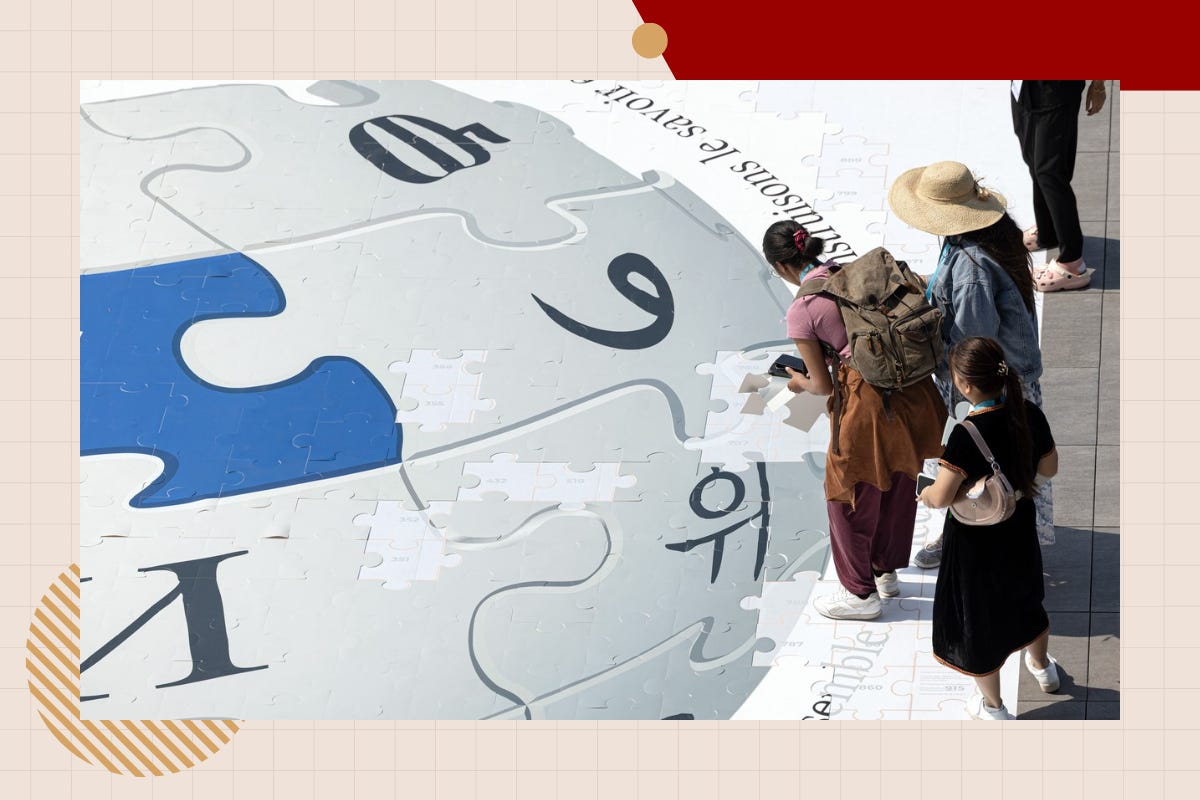

Liberté, Égalité, Solidarité
Weeks before Wikimania, the Wikimedia Foundation made the shock decisions first to abruptly fire Brooke Vibber—the lead developer of MediaWiki for more than 20 years, and the WMF’s first employee—and then to disband the entire Community Tech team2: six people whose jobs were building tools requested by the community, with the unstated but widely understood subtext that union organizing was at the core of it.
By the time everyone landed in Paris, Wiki Workers United’s U.S. branch had formally demanded voluntary recognition, with the support of the Communications Workers of America, and set a deadline of July 24, right in the middle of the conference. More than 1,000 Wikimedians had signed a solidarity petition, and some were openly weighing an editorial strike. The executives arriving in Paris, including newly installed CEO Bernadette Meehan, were—contrary to the famous Wikipedia essay—very much on deadline.
The conference hit peak Scoville during a panel billed as a “Fireside Chat with the Wikimedia Foundation Executives”—see for yourself on YouTube—the first real opportunity for union supporters to ask for recognition in a public setting. With Wikipedia founder Jimmy Wales seated in the front row, the panel opened with community-elected board trustee Bobby Shabangu asking Meehan a series of friendly questions. On the first six months of her tenure, she ultimately settled on: “It’s the start of a journey is how it has been.”
Fine, but the room had questions.
Instead, Shabangu threw to chief product and technology officer Selena Deckelmann to address the important matters raised by—no, it was to demo a new mobile editing tool. Meehan, to her partial credit, read the room well enough to hastily add that question time was coming. Meanwhile, for some reason, Deckelmann chose a French Wikipedia page to showcase the tool, despite admitting “I don’t actually speak or read French—I’m not going to submit these changes at the end.” After rushing through it, and apologizing for the rushing, she finished. And then… asked if she could do a second demonstration. At which point a former officer of Wikimedia France drew applause for saying, respectfully, this was not the time for a tech demo.
Finally, the Q&A. Even with a full battery of WMF executives onstage, every question went to Meehan, the first three all asking basically the same thing: “Are you going to honor the movement’s values and do the right thing and recognize the union today?” Meehan responded by deploying a skill for which she was almost certainly hired: saying a great many words without saying anything one could latch onto. And yet, she was not entirely successful in this. One early explanation for not addressing the union’s demands at Wikimania—“our focus is on executing and helping the core organizing team execute a great event”—fell flat, as everyone in the room knew Wikimanias are organized by the local chapter.
The follow-up question: “Why not today?”
And while she insisted, more than once, “If the decision is to have a union, we’ll have a union,” she also made the unfortunate error of playing the my-job-is-hard card, saying of those who would ask her to move faster, allegedly at the expense of proper protocol: “I don’t have that luxury as the CEO of an organization with 700 employees in 44 different countries.”
Later, responding to another question, she said, “I’m not going to litigate it in this room,” causing enough of a stir that an organizer stepped in to suggest it was time for another topic.
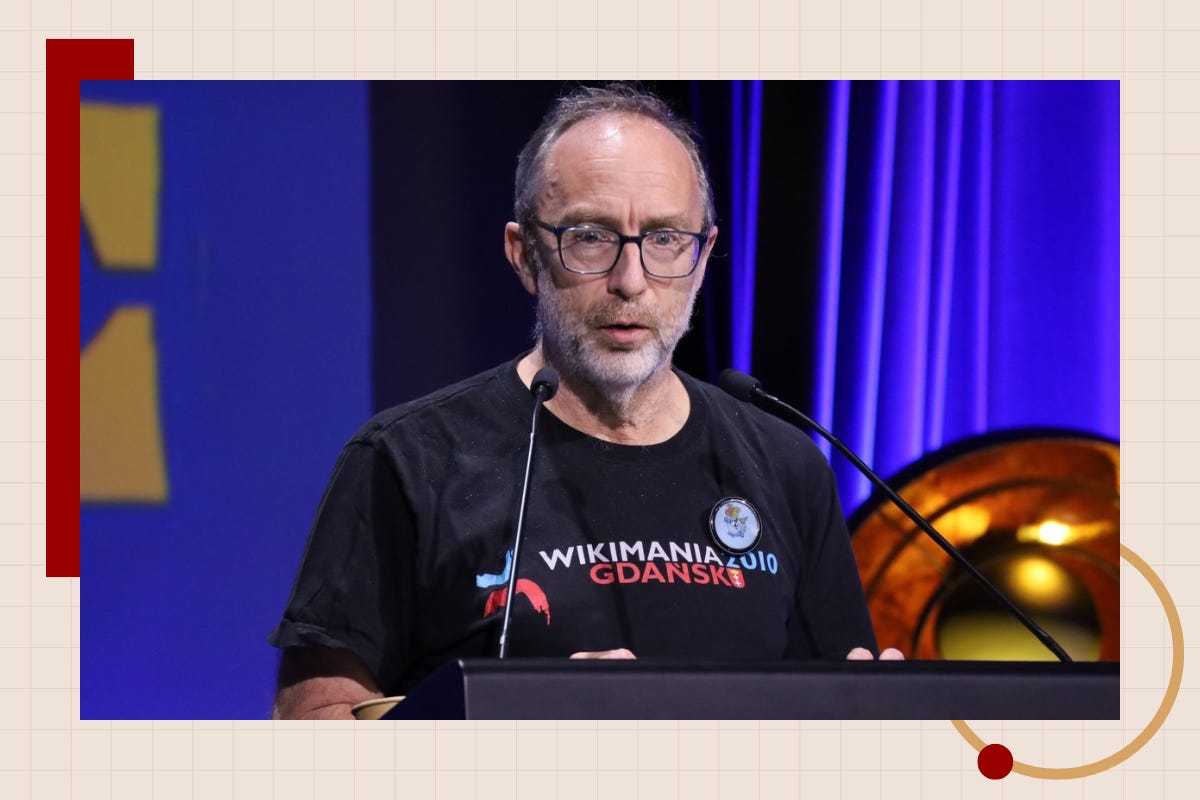

Yes We Can’t
On July 27, one day after Wikimania 2026 ended, the WMF announced it would not voluntarily recognize the union, despite visible support from staff and community, not to mention a growing sense of inevitability. Instead the WMF is exercising its right to a secret-ballot election overseen by the National Labor Relations Board (NRLB). WWU and its backers at CWA agreed to participate, but opined in their response that the WMF was taking the “low road.”
It was lost on no one that the NLRB—never a priority of any Republican administration—has taken an even harder anti-union turn in Trump’s second term. And worse, word trickled out that the WMF had retained the services of Littler Mendelson, a U.S. corporate law firm best known for leading anti-union campaigns at Starbucks, Apple, and Amazon.
In the week since, Jimmy Wales has clearly spent a lot of time on his talk page, gamely if not entirely successfully defending the decisions of the executives he helped put in place. He’s always Jimmy—slightly aloof but good-intentioned, if vague and imprecise, and not even expected to be effectual—trying to reassure everyone that everything will turn out all right, just trust him, after all, he wrote the book on it.
The community was not persuaded.
A recent Wikimedian of the Year went after him hard, and another editor scoffed at the notion that the union had asked the WMF to skip due diligence. At one point Wales was categorical and emphatic: “There are no ‘union-avoidance law firms’ involved here,” adding that if the WMF engaged in any union busting, “I’d be the first one on the picket lines.” GorillaWarfare, who spent years on ArbCom, wrote that this is “a fight that I do not believe the WMF will win.”
In the meantime, an anonymous ex-WMF data scientist had launched a blog called Wikifired, alleging managerial incompetence and ass-covering, and revealing the paltry sum offered (and declined) for their silence: $26,845.52.
Ultimately, Jimmy’s reputation will survive this episode; insulation is one thing a board of trustees and well-paid executive staff can buy, not to mention being the continuously involved founder of a movement still going quite strong actually, despite it all, in its third decade. But it’s hard to look at the start of Meehan’s tenure and not wonder how long she’ll be part of it.
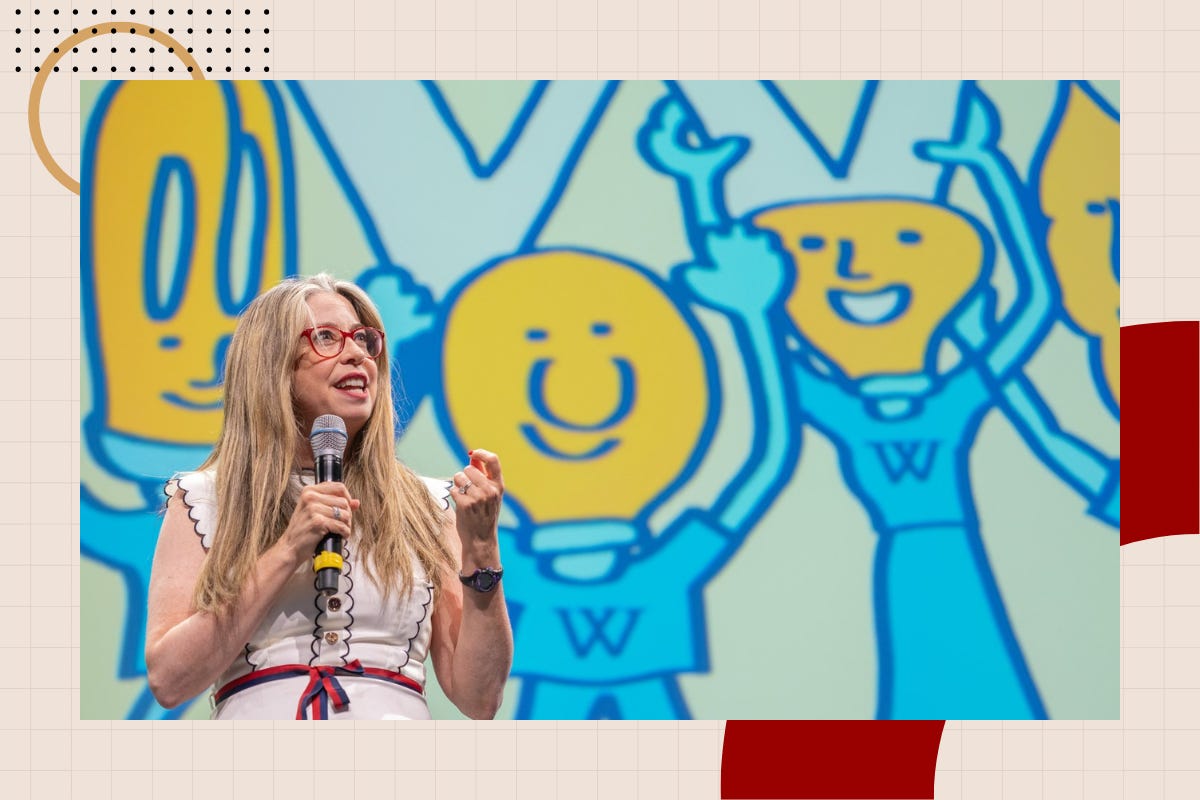

Bernadette Peters Out
A running joke has started to coalesce, that Meehan will find a way to mention her time working for President Obama, as she awkwardly did in her keynote speech at the start of the conference. Whatever her point was, it didn’t land. And it self-consciously invokes the neoliberal era Obama defined, which hasn’t been our reality for some time. And now here is a veteran of several Democratic administrations playing the role of the union-busting corporate manager.
The question of whether a political operative is what the WMF needs is worth asking on its own. The thinking, one assumes, is: here is a savvy player, a political veteran, a survivor. But that experience is entirely on one side of the aisle, and Donald Trump may not hate Democrats quite as much as he hates RINO Republicans, but he hates them all the same. Which is not to say the board should have appointed John Yoo—can you imagine—but a wiser course might have been to look outside the realm of politics entirely.
It’s also hard not to think about the lineage. Katherine Maher—now CEO of NPR, dissuading no one of the notion that Wikipedia is more liberal than it lets on—looks like she might go down as the last Wikimedia leader who seemed to genuinely care about the project. Maher came from the same NGO world as her successors, but she had also been promoted up from communications director, and maintained a collegiality within the movement more like that of Wales, and the first WMF chief, Sue Gardner, than of any other WMF chief before or since.
When Meehan leaves, what do you suppose are the chances she goes to work at another movement-aligned organization?
Following the uneventful leadership of Maryana Iskander, and the initially quiet appointment of Meehan, it seems obvious to many in the movement that no future CEO will ever come from the community, nor even from longtime staff. From here on, the WMF will continue to be led by ambassadors, chancellors, and holders of various other honorifics. So much of what the job really involves is managing large budgets, external stakeholders, and international systems. The Wikimedia Foundation is an NGO, and one that does so many things it’s not clear, even to the community it supposedly exists to support, what it actually does.
The Wikipedian has long argued that the Wikimedia Foundation is too big for its own good—no longer able, if it ever really was, to channel the movement’s vision or support its many mechanisms. Wikipedia would be better served by a WMF reimagined as a largely grant-making body, with a handful of modestly-sized organizations each responsible for a critical piece of Wikimedia infrastructure. It would be easier to understand what they’re doing, easier to hold to account, and most of all, truer to the distributed movement that Wikimedia has always been.
Instead, WMF tries to be everything to everyone, with the expected results.
Which brings me to the last time I saw Bernadette Meehan in Paris. It was at the AI Fringe space on Thursday afternoon, where a dozen or so Wikimedians were holding their own small closing ceremony. She appeared in the back, largely unnoticed, and said to the two or three Wikimedians who actually noticed her: “I was on my walk back, and I thought, that looks like wiki people.” I said, yes, we are, then looked away for a moment, then back—and she was gone.
A friendly gesture, no doubt, but one carrying no weight. In the end, this might be how the Bernadette Meehan era goes: claiming to mean well; misaligned from the start; and perhaps departing before anything could be asked of her.
The original version of this post overstated ChaoticEnby’s contribution to the LLM prohibition; see their detailed explanation in the comments.
The original version of this post mistakenly listed Vibber as head of the Community Tech team; The Wikipedian regrets the error.
Another small correction: I did not author (most of) the March 2026 guideline on LLM content. Kowal2701 was the main author, and other folks from WikiProject AI Cleanup (including myself, but not only) workshopped it from there. My main role was starting the RfC about this guideline, but I often see this mix-up!
Also, I'll do a reverse Jimbo and remind folks that I was co-founder of WikiProject AI Cleanup (alongside 3df and Queen of Hearts) and AI Tools (alongside LuniZunie), who absolutely deserve credit too!
– Chaotic Enby
Small correction -- I did not lead the Wikimedia Foundation Community Tech team; my departure from WMF and the dissolution of Commtech were two separate incidents that were publicly announced around the same time.
(I realize this is slightly confusing because I *am* a member of WikiProject Medicine Foundation's Community Tech Team which was created to pick up some of the slack after WMF's Commtech was disbanded.)
-- brooke vibber